Circuit boards
Multi-board electronics for wearables and small devices. We take it from schematic through placement and routing to a clean design-rule check, and hand over fab-ready files.
We lay out circuit boards for wearables and small devices, and design parts around the loads they carry. You get files ready for the fab or the printer.
Fixed price, scoped before we start. A straight answer within one business day. Building a whole device? Take the 1-minute check.
Hardware
Every board goes through a clean design-rule check, with each part checked against supplier stock. Every mechanical part is strength-checked on its load cases, then checked again after the cut.
Multi-board electronics for wearables and small devices. We take it from schematic through placement and routing to a clean design-rule check, and hand over fab-ready files.
Our own design tool. A brief goes in and cut-ready files come out, checked by finite-element analysis against every load case in the brief. A person reviews every design before anything is made.
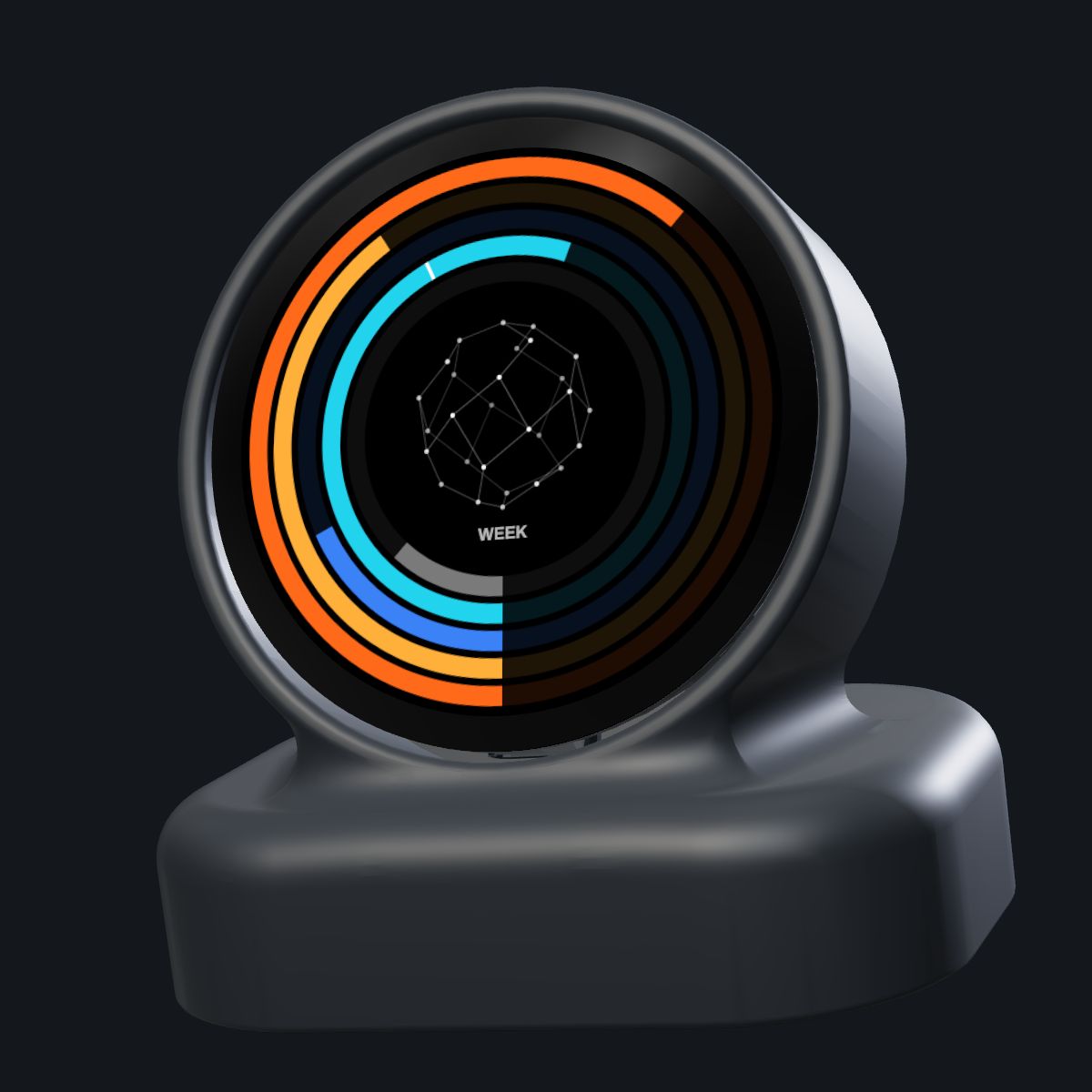
Housings and stands for small devices. THE ORB is ours: designed and assembled in Brisbane, with its first prototype 3D-printed.
Printed and assembled here, with the printer wired into the same line as the design tool. The laptop stand below is in daily use. The engine mount is a design study.
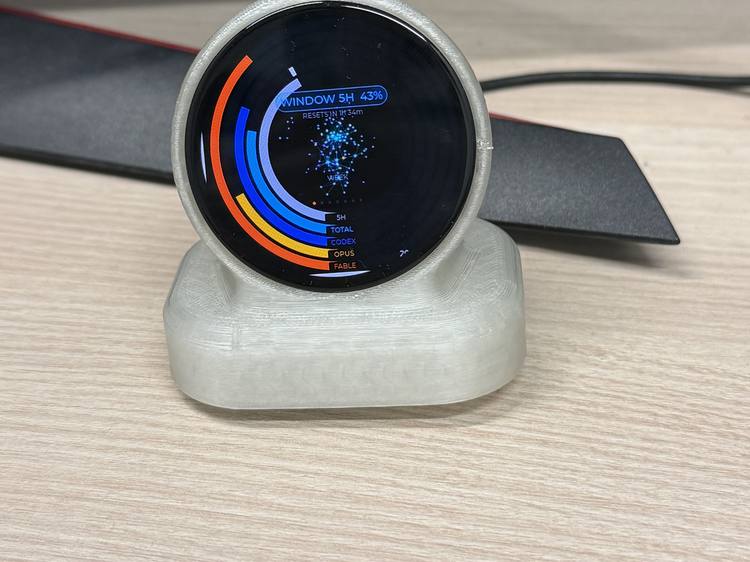
A printed housing and stand around a 1.75-inch round touch display with a speaker. The batch unit is designed and assembled in Brisbane.
Prompt to CAD
Two parts from Prompt to CAD, the design tool we built for ourselves. A brief goes in. Cut-ready files come out, checked against every load case in the brief.
One side plate of the cradle for a 16 kg kart engine, cut from 8 mm 6061-T6 aluminium. Bumps, a clutch grab and hard braking were each checked. Material that carried no load came out. Then the cut part was checked again, every load case, before the files were released. Brief to cut-ready STEP file in under nine minutes.
A design study: in-plane loads only, and no substitute for a physical test.
217 gper plate, was 418 g
1.4worst-case safety factor, checked on the cut part
8.6 minbrief to cut-ready files
A cooling wedge for a 14-inch MacBook Pro. Five load cases set the shape, 41% of the plate came out, the cut part was checked again before printing, and the printer on the bench is wired into the same line. Tools that didn’t know each other, made to work as one.
50 gper plate, was 84 g
1.6worst-case safety factor, checked on the cut part
1.8 minbrief to print-ready files
Need a part designed around the loads it carries? Send us the brief. Two paragraphs is plenty.
Parts made to fit
A snapped mounting lug can leave a headlight that won’t bolt in. We draw a replacement lug in SolidWorks for that housing and print it. There are bolt-on and weld-in designs.

Mercedes C-Class (W205), GLC (X253), A-Class (W177), CLA (C118) and B-Class (W247), plus a Lamborghini Huracán. Each lug is drawn for its own housing. For the A-Class and CLA there’s also an alignment tool, drawn to line the new lug up.
Renders from the CAD files.

GLC (X253), lower lug

GLC (X253), upper lug

B-Class (W247), upper, bolt-on

CLA (C118), bolt-on

C-Class (W205), upper, weld-in

Huracán, side mount

Headlight buckets for a projector conversion, drawn in two versions. An adaptor bracket designed to fit E46 325i brake calipers to an E30, drawn in 6061 aluminium with the CNC program written. A brake booster cradle and a brake cooling duct for the same project.
Renders from the CAD files.

E46 caliper to E30 bracket, 6061

Brake booster cradle

Brake cooling duct
Need a part nobody sells any more? Tell us the car or machine and what broke. We reply within one business day.
Device projects
The usual setup is three teams, with an integration phase bolted on the end. Hardware slips, so firmware stalls. Firmware changes an interface, so the app starts over. That’s where the schedule goes.
Early is cheap. Deciding the seams now costs a conversation. Deciding them after the board is made costs a respin.
Every interface between owners is a place where a change on one side quietly breaks the other.
Whoever picks up a layer last inherits every assumption the others made.
handoff
handoff
Two seams to argue over
No integration phase
No integration phase
Our team holds all five layers, from the board to the cloud, so nothing gets lost in a handoff. When the firmware changes an interface, the people who changed it fix the app as well.
Six questions, about a minute. You get a seam count, the three risks we would look at first, and which of our four fixed-price offers fits. Nothing is sent anywhere unless you choose to send it.
The check needs JavaScript. Tell us about the device below instead.
The risks we would look at first
None of the risks on our list fired for these answers.
Where we’d start:
Prices are ex GST. Send it to us and we’ll reply within one business day. See all four offers on the Firmware page
Devices
Desk device
Our own desk instrument, designed and assembled in Brisbane, running our firmware and companion app. A$199, ships within 4 weeks of your order.
Wearable
Assistive glasses
We built the firmware, the iPhone app and the prototype hardware, and field-tested them with a vision-impaired user. Our own circuit boards for the next version are designed. They haven’t been made yet. Patent application filed.
Device
DuaBox
A kids’ audio player driven by tapping cards. Touch display, NFC, 315 cards.
Building a whole device? Start with a one-week Bring-Up Review for $3,500 ex GST. We read the whole chain, board to cloud, and hand back a costed path to something you can ship.
Two paragraphs is plenty. You’ll get a straight answer within one business day: how we’d start and what that first step costs, or that it isn’t for us and who to ask instead.
Sent
It’s with our team. We’ll come back to you within one business day.